Reviewing They Not Like Us Juneteenth Design
As an embroidery designer who has spent years digitizing and testing files for real-world production, I approach every new asset with a critical eye. It is not enough for a graphic to look good on a screen; it must hold up under the needle. Recently, I evaluated They Not Like Us Juneteenth Black Histor, a design marketed primarily as a print-on-demand T-shirt graphic. While the product description highlights its utility for POD with high-resolution PNGs and vector files, my focus was strictly on its potential as a foundation for machine embroidery projects. Can a design born for ink translate effectively to thread? The answer requires a nuanced look at layout, density, and fabric interaction.
First Impressions: Mood and Visual Personality
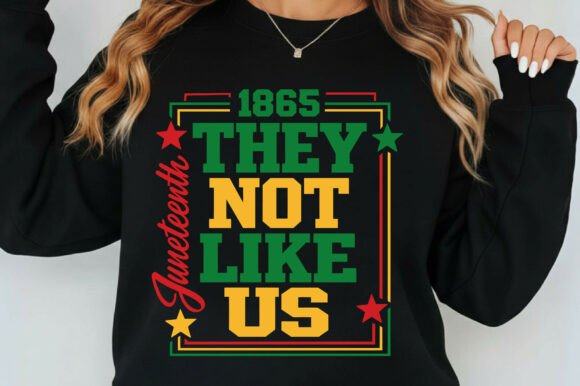
The immediate impact of They Not Like Us Juneteenth Black Histor is bold and declarative. The typography and layout suggest a mood of pride, resilience, and cultural celebration, which aligns perfectly with the spirit of Juneteenth. Visually, the design relies on strong shapes and clear lines rather than intricate, fragile details. This is a positive indicator for embroidery. Designs that depend on subtle gradients or hairline strokes often fail when converted to stitch, but this graphic’s robust structure suggests it can withstand the physical texture of thread.
For an embroidery project, the visual personality here is modern and assertive. It does not try to be overly decorative or whimsical. Instead, it serves as a statement piece. When I visualize this stitched out, I see it working best as a central focal point rather than a subtle accent. The lack of excessive clutter means that if digitized correctly, it could avoid the common pitfall of looking "muddy" or over-stitched.
Real-World Application: From Screen to Stitch
To truly test the viability of They Not Like Us Juneteenth Black Histor, I imagined a specific client scenario. A small boutique owner approached me about creating a limited run of custom apparel for a Juneteenth community event. She wanted something that felt handmade and premium, distinct from the mass-produced screen-printed shirts flooding the market. This is where the transition from a digital embroidery file to a tangible handmade product becomes critical.
I considered using this design on a heavy-weight cotton tote bag. Tote bags are popular craft business items because they offer a large, stable canvas. The design’s horizontal layout fits well within standard hoop sizes, such as a 5x7 or 6x10 inch frame. On a natural canvas fabric, the contrast of vibrant thread colors against the neutral background would make the message pop. However, because the source files are PNG, EPS, and AI, I would need to manually digitize this into a proper machine embroidery format. This step is crucial. You cannot simply print a PNG onto stabilizer and expect a clean result.
Another strong candidate for this design is sweatshirt embroidery. A black or deep navy crewneck provides a sophisticated backdrop. The bold nature of the graphics ensures readability even from a distance. For an Etsy seller looking to expand their holiday embroidery collection, this type of design offers high perceived value. Customers often associate embroidered text with higher quality than printed vinyl, making it a compelling upsell for personalized gifts.
Navigating Technical Challenges
While the design has strong bones, there are areas where caution is necessary. The primary challenge with any text-heavy or graphic-heavy design is stitch density. If you convert the solid black areas of the PNG directly into a fill stitch without proper underlay or spacing, the resulting patch will be stiff and may cause the fabric to pucker. This is especially problematic on stretchy fabrics like jersey knits used in t-shirts or baby clothes.
For baby embroidery, I would advise scaling the design down significantly and ensuring that no small, isolated elements are too delicate. Babies move, and their clothes undergo frequent washing. A dense satin stitch border might help contain the fill stitches, preventing fraying over time. Additionally, when working on curved surfaces like caps, the width of the design must be carefully checked against the cap’s front panel. If the design is too wide, it will wrap around the curve, distorting the text and making it unreadable.
Dark fabric presents another hurdle. If you are stitching this on a black hoodie, you cannot rely on the background color to define the edges. You must use a contrasting thread color or incorporate a running stitch outline to ensure the design stands out. Test the design on scrap fabric first. Check thread color contrast rigorously. What looks sharp on a white computer monitor may disappear into a dark charcoal fleece if the thread choice is not strategic.
Enhancing Product Value and Brand Consistency
Using They Not Like Us Juneteenth Black Histor in your commercial embroidery lineup can significantly boost brand consistency if handled professionally. High-quality stitching signals attention to detail. When a customer receives a finished product where the tension is even, the backings are clean, and the design is centered, it builds trust. This trust translates into repeat business and positive reviews, which are vital for any small shop product.
Moreover, this design lends itself well to printable mockups. Before you commit to stitching fifty units, create digital previews showing the design on various items—aprons, pillow covers, kitchen towels. This allows you to gauge customer interest without wasting thread and stabilizer. For digital product sellers, offering this as a pre-digitized embroidery file (if you have the rights to distribute the digitized version) can be a lucrative addition to your design assets. However, always confirm licensing before selling finished items or digital products. The original description lists PNG, EPS, and AI files, which are typically for printing, not necessarily for redistribution as embroidery files.
Practical Designer Notes for Execution
If you decide to move forward with this design for your next embroidery project, keep these practical steps in mind:
- Digitize with Care: Do not auto-digitize. Manually set stitch angles to follow the flow of the letters and shapes. Use a combination of satin stitch for borders and fill stitch for larger areas to manage bulk.
- Stabilizer Selection: Use a cut-away stabilizer for knit fabrics like t-shirts and sweatshirts to provide long-term support. For woven fabrics like tote bags or aprons, a tear-away may suffice, but test first.
- Hoop Size Verification: Measure the design dimensions against your machine’s maximum hoop size. If the design exceeds your hoop, consider splitting it or scaling it down, keeping readability in mind.
- Thread Choice: Select high-quality polyester or rayon threads. For Juneteenth themes, traditional pan-African colors (red, black, green) or gold accents can enhance the thematic resonance.
- Test Wash: Always wash and dry a test sample. This reveals any shrinkage issues or thread bleeding that might not be visible immediately after stitching.
In conclusion, They Not Like Us Juneteenth Black Histor is a potent graphic with strong potential for embroidery adaptation. It moves beyond simple T-Shirt Designs and Graphics into the realm of meaningful, wearable art. By respecting the technical requirements of machine embroidery—managing density, choosing the right stabilizer, and selecting appropriate fabrics—you can transform this digital asset into a standout handmade product. Whether for a custom apparel line, a boutique’s holiday collection, or a personalized gift, this design rewards careful execution with professional, eye-catching results.