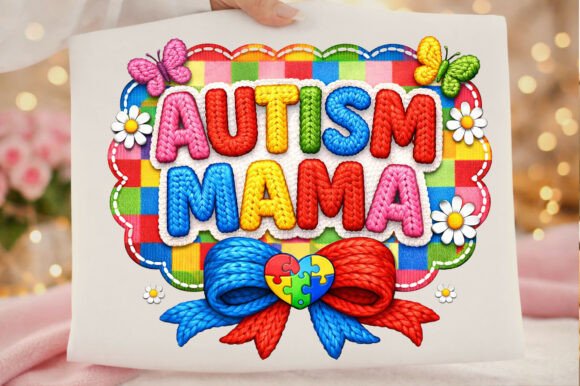
Reviewing the Autism Mama Coquette Bow Design
As a designer who spends half my life digitizing patterns and the other half testing them on actual fabric, I have learned to look past the glossy mockups. We all know that what looks crisp on a screen can sometimes turn into a tangled mess under the needle. Recently, I took a close look at the Autism Mama Coquette Bow Faux Yarn Png to see if it holds up in real-world embroidery scenarios. This is not just about aesthetics; it is about functionality, stitchability, and whether this graphic translates well from a digital asset to a tangible, high-quality finished product.
First Impressions and Visual Personality
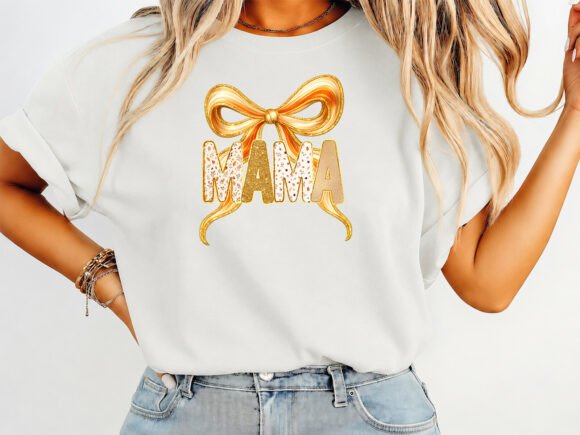
The first thing that strikes you about this design is its gentle, nurturing mood. The combination of the "Autism Mama" text with the coquette-style bow creates a soft, approachable aesthetic that resonates deeply with current trends in handmade apparel. The faux yarn texture implied in the graphic suggests warmth and comfort, which aligns perfectly with the target audience. For embroidery designers, this visual cue is critical. It tells us that the final stitched product should feel cozy and inviting, rather than stiff or corporate.
The layout is balanced, with the bow acting as a charming accent that frames the text without overwhelming it. This is essential for readability, especially when scaling down for smaller items. The design feels modern yet timeless, fitting seamlessly into the category of T-Shirt Designs while offering enough versatility for broader applications. It does not scream for attention; instead, it invites a closer look, which is exactly what you want for a personalized gift or a boutique item.
Real-World Application: The Sweatshirt Test
To truly evaluate the Autism Mama Coquette Bow Faux Yarn Png, I imagined applying it to a heavy-weight cotton sweatshirt. This is a common request for small shop owners and Etsy sellers, particularly during the cooler months. The design’s structure suggests it would perform well here. The boldness of the text ensures it remains legible against the textured surface of fleece or French terry cloth.
However, the "faux yarn" aspect of the graphic requires careful translation into stitches. If you are digitizing this yourself or working with a digitizer, you cannot simply rely on a standard fill stitch. To capture that soft, yarn-like appearance, you might need to experiment with varied thread weights or a combination of satin stitch borders with a lighter fill density. The goal is to mimic the visual texture of the PNG without creating a dense, cardboard-like patch on the fabric. For a baby embroidery project, such as a onesie or a soft blanket, this attention to texture is even more critical to maintain comfort against sensitive skin.
Versatility Across Products
Beyond sweatshirts, this design shows promise for a variety of custom apparel and accessories. Consider a canvas tote bag design. The contrast between the dark thread often used for text and the natural canvas background can create a striking, rustic look. Here, the vector files included in the package—specifically the EPS and AI files—become invaluable. They allow you to scale the design precisely without losing edge clarity, ensuring that the curves of the bow remain smooth regardless of the hoop size.
For those interested in creating embroidered patches, this graphic is a strong candidate. The self-contained nature of the bow and text means it can be easily bordered and cut. A satin stitch border would define the edges sharply, making it a durable addition to jackets or backpacks. However, when moving to curved surfaces like caps, you must be cautious. The width of the design needs to fit within the standard cap frame, and the stitch density must be adjusted to prevent puckering on the structured front panel.
Technical Considerations for Embroiderers
While the provided files include high-resolution PNGs suitable for print-on-demand (POD) and sublimation, embroidery requires a different approach. The 300 DPI transparent PNGs are excellent for creating printable mockups to show clients, but they do not replace a proper machine embroidery file. If you are purchasing this as a graphic to convert, or if it comes with an SVG for cutting machines, remember that SVGs are not embroidery files. You will need to digitize the design or ensure you have the correct DST, PES, or JEF formats for your specific machine.
Stitch density is a major factor here. The bow, with its loops and curves, can become problematic if the stitches are too dense. On stretchy fabrics like jersey tees, a high-density fill can cause the garment to warp. Using a cut-away stabilizer is non-negotiable for this type of design to provide long-term support. For woven fabrics like aprons or tea towels, a tear-away stabilizer might suffice, but always test on scrap fabric first. This step saves you from ruining expensive blanks and helps you determine the optimal thread tension.
Thread color choice also plays a pivotal role. The design’s charm lies in its softness. Using high-contrast, neon threads might clash with the "coquette" vibe. Instead, consider muted pastels, warm neutrals, or classic navy and cream combinations. Testing the design in black and white mockups can help you understand the value contrast before you even thread the needle. This ensures that the text remains readable and the bow retains its shape visually, even from a distance.
Navigating Limitations and Fabric Choices
No design is universal, and the Autism Mama Coquette Bow Faux Yarn Png has its limits. Tiny lettering can be a challenge in embroidery. If you scale the design down too much for a small hoop, such as a 4x4 inch frame, the letters may merge or become illegible. Always check the minimum recommended size for the text elements. If the design includes fine details in the bow’s ribbons, these might need simplification during the digitizing process to prevent thread breaks and bird nests.
Dark fabrics present another hurdle. If you are stitching on a black hoodie, you will need to use a light-colored underlay or a backing material to make the colors pop. Without this, the thread colors may appear dull or muted. Additionally, for items that require frequent washing, such as kitchen towels or baby clothes, ensure that the stitch count is not excessively high in any one area, as this can lead to stiffness and discomfort over time.
Commercial Value and Brand Consistency
For craft business owners and digital product sellers, the appeal of this design lies in its emotional connection. "Autism Mama" is a term of pride and community. Using this design in your commercial embroidery projects can help build trust and recognition among your customers. It signals that you understand their identity and values. However, professionalism is key. A poorly stitched version of this design can do more harm than good. Ensuring clean trims, proper stabilization, and high-quality thread reflects positively on your brand.
When listing this as a small shop product or an Etsy listing, use the high-quality PNGs to create attractive visuals. Show the design on various items—pillow covers, holiday gifts, and nursery decor—to demonstrate its versatility. Highlight the care taken in the stitching process. Customers are willing to pay more for a handmade product that looks polished and durable. The inclusion of vector files like SVG and EPS also adds value if you are selling the digital asset itself, allowing buyers to use it for both print and cut projects, broadening your market reach.
Final Verdict for Designers
The Autism Mama Coquette Bow Faux Yarn Png is a thoughtful, trend-aware graphic that translates well into embroidery when handled with care. It is not a plug-and-play solution for every machine without proper digitizing or file preparation, but it offers a solid foundation for creating meaningful, high-value items. Whether you are making a personalized gift for a friend or stocking your boutique with custom apparel, this design offers a blend of style and sentiment that resonates. Just remember to respect the technical requirements of embroidery: stabilize well, choose your threads wisely, and always test before you commit to the final piece.