Reviewing Planner Tag Icons for Embroidery Projects
As a designer who spends half my life digitizing and the other half stitching, I have learned that not every graphic translates well to thread. We often browse marketplaces looking for the perfect Illustrations or Graphics, hoping they will elevate our next product line. Recently, I took a close look at the Planner Tag Icons Black White Vector set to determine if it holds up under the needle. This is not just a digital asset review; it is a practical evaluation of how these elements perform in real-world embroidery scenarios.
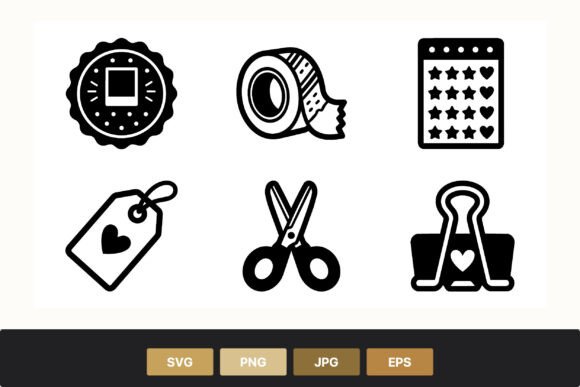
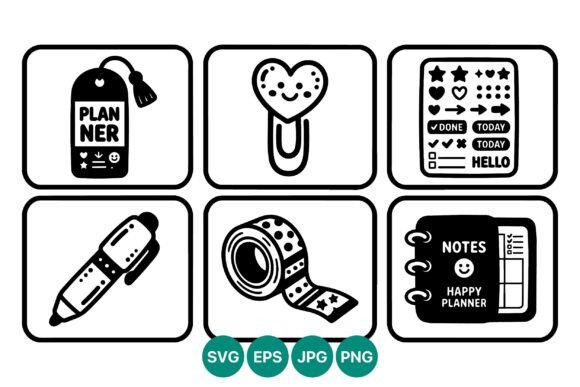
The first impression of this collection is one of organized charm. The set features a planner tag with lettering, a heart-shaped paperclip, washi tape strips, a pen, a planner sticker sheet, and a happy planner notebook with notes. Visually, the black and white aesthetic suggests clarity and minimalism. For an embroidery designer, this is both a blessing and a challenge. High-contrast, simple shapes are excellent for readability, but they leave no room for error in stitch placement. When I imagine these icons stitched out, I see them working best on projects that value a clean, modern, or "study aesthetic" vibe. They do not scream for attention with loud colors; instead, they invite a closer look, which is exactly what you want for personalized items.
Real-World Application: The Custom Tote Bag Test
To truly evaluate the Planner Tag Icons Black White Vector, I mentally placed it into a current client project: a custom embroidered tote bag for a local bookstore’s loyalty program. The goal was to create a handmade product that felt intellectual yet approachable. I selected the planner tag icon and the notebook element for this test.
On a canvas tote, texture is key. The fabric has a visible weave, which can swallow up fine details. I noticed that the washi tape and pen icons, being relatively linear, would require careful attention to stitch density. If the density is too low, the fabric shows through, breaking the solid black illusion. If it is too high, the fabric puckers. In my experience, these types of design assets work beautifully when paired with a cut-away stabilizer to maintain structure. The heart-shaped paperclip stood out as a potential favorite for smaller accents, perhaps on a zipper pull or a corner detail, because its curved lines allow for smooth satin stitch execution without excessive jumping.
This scenario highlights why understanding the source material matters. Since this is a vector-based set intended for Illustrations, the lines are crisp. However, converting these to a machine embroidery design requires deciding between a fill stitch for the larger notebook areas or a running stitch outline for a sketch-like effect. For a boutique feel, I would recommend a dense fill for the notebook body to give it weight, contrasted with a lighter satin border on the planner tag.
Versatility Across Product Lines
Beyond tote bags, where else does this set shine? I see significant potential in custom apparel, particularly sweatshirts and hoodies. The sweatshirt embroidery trend is currently leaning towards small, chest-placed logos rather than large back prints. The pen and washi tape icons are perfectly sized for this application. They offer a subtle nod to organization and creativity without overwhelming the garment.
For Etsy sellers and small shop owners, this collection offers versatility. You can mix and match the elements to create unique compositions. Imagine the planner sticker sheet used as a central motif on a pillow cover for a home office setup, or the happy planner notebook featured on a kitchen towel for a teacher’s gift. The thematic consistency allows for cohesive branding. If you are selling digital embroidery file bundles, these icons could serve as excellent add-ons for customers who buy planner-themed layouts.
However, caution is needed with baby embroidery. While the icons are cute, the lettering on the planner tag must be scrutinized. Tiny text often becomes illegible when stitched, especially on stretchy fabrics like onesies. If the vector includes small print, I advise enlarging the design significantly or removing the text entirely for infant garments. Stick to the graphical elements like the heart paperclip or the washi tape for safer, more durable results on delicate items.
Technical Considerations for Stitching Success
When working with any new embroidery file, technical due diligence is non-negotiable. Here are my practical notes for using the Planner Tag Icons Black White Vector in your next embroidery project:
- Test on Scrap Fabric: Always run a test stitch on the same material you intend to use for the finished product. This helps you gauge how the thread colors interact with the fabric base.
- Check Stitch Density: Black thread on dark fabric can disappear if the density is too low. Conversely, on light fabric, high-density black stitches can cause pulling. Adjust your tension and density settings accordingly.
- Hoop Size Constraints: Ensure the design fits your hoop. Some icons may need to be scaled down for caps or up for blankets. Verify the dimensions before loading the file.
- Fabric Texture Matters: On textured fabrics like terry cloth or heavy canvas, consider using an applique design technique for the larger shapes, such as the notebook, to reduce stitch count and improve clarity.
- Stabilizer Selection: Use a tear-away stabilizer for stable woven fabrics like cotton tote bags. For stretchy knits like t-shirts or sweatshirts, a cut-away stabilizer is essential to prevent distortion over time.
It is also crucial to address the format. The product description mentions a ZIP file containing vectors. As an embroiderer, you cannot plug a vector directly into your machine. You must digitize these graphics or ensure you are purchasing a version that has already been converted into a compatible machine embroidery design format (such as PES, DST, or EXP). If you are digitizing them yourself, pay close attention to the corners of the planner tag and the tips of the pen. Sharp corners in vectors often result in thread bunching if not properly under-stitched or tapered in the digitizing software.
Commercial Viability and Brand Consistency
For commercial embroidery professionals, the value of this set lies in its adaptability. It allows for the creation of a cohesive brand identity for stationery lovers, students, and organizational enthusiasts. When you present a personalized gift featuring these icons, the clean lines convey professionalism. Customers trust designs that look intentional and well-executed.
If you are creating printable mockup images for your online store, these black and white icons are ideal. They photograph well and provide a neutral backdrop that lets the texture of the embroidery stand out. This enhances buyer engagement, as customers can clearly see the stitch quality in your photos. For holiday embroidery gifts, such as end-of-year presents for teachers or colleagues, the planner theme is timely and relevant. It speaks to resolution, planning, and fresh starts.
Before selling any small shop product made with these designs, confirm the licensing terms. Ensure that the license covers commercial use for physical goods. Many vector artists allow personal use but require an extended license for commercial sales. Protecting your business means respecting intellectual property rights.
Final Verdict
The Planner Tag Icons Black White Vector set is a strong contender for designers looking to add a touch of structured whimsy to their portfolio. It performs best on stable fabrics with adequate stabilization, particularly in tote bags, sweatshirts, and home decor items. While it requires careful handling regarding stitch density and text legibility, the visual payoff is worth the effort. By treating these graphics not just as images but as structural elements of your embroidery project, you can create high-value, professional-looking items that resonate with your audience. Remember to test, adjust, and respect the limitations of the medium, and these icons will become a reliable part of your design toolkit.