Review: Unapologetically Black Free-ish Shirt Design
As an embroidery designer who spends more time staring at stitch simulations than I do sleeping, I have learned that not every graphic translates well to thread. We often see stunning T-Shirt Designs in digital formats that look incredible on a screen but turn into a tangled mess under the needle. Recently, I evaluated the Unapologetically Black Free-ish Shirt design to determine its viability for real-world production. This is not just about aesthetics; it is about functionality, durability, and the final perceived value of the finished product.
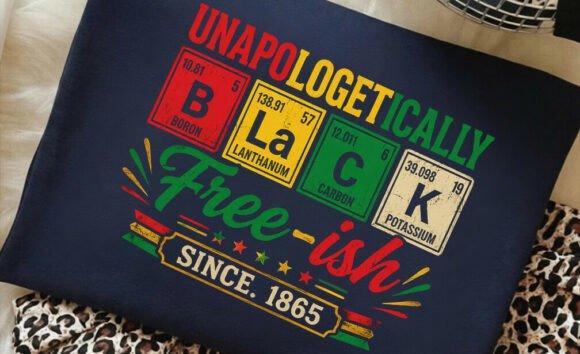
The design centers on a bold, historical statement: "Unapologetically Black Free-ish Since 1865." It carries weight, both visually and culturally. For small business owners and Etsy sellers, this type of Graphics asset offers a powerful way to connect with customers looking for meaningful, identity-affirming apparel. However, before you load this into your machine, there are critical technical considerations to address.
First Impressions and Visual Personality
When I first opened the file, the immediate impression was one of strong typographic presence. The layout is clean, relying on font weight and spacing rather than complex illustrations to make its point. This is generally good news for embroiderers. Complex gradients and photo-realistic details are nightmares for standard home machines, but bold text can be managed with the right technique.
The mood is assertive yet celebratory. It fits naturally into categories like custom apparel for family reunions, Juneteenth celebrations, or everyday wear that sparks conversation. For a craft business, this versatility is key. You are not limited to one niche; you can market this as a personalized gift, a statement piece for a boutique, or part of a larger collection of heritage-focused items.
Real-World Application: The Sweatshirt Test
To truly judge a design, you must imagine it stitched out. I visualized this design on a heavyweight, charcoal-grey crewneck sweatshirt. This is a popular item for small shop products because it offers a large, stable canvas. The contrast between white or cream thread and the dark fabric would make the text pop, ensuring readability from a distance.
In this scenario, the Unapologetically Black Free-ish Shirt design performs well because of its linear nature. Unlike a dense applique design that might require extensive trimming and backing removal, text-based designs often rely on a combination of satin stitch for smaller elements and fill stitch for larger letters. If the digitizer has done their job correctly, the satin columns should be tight enough to prevent snagging but wide enough to cover the fabric completely.
However, I also considered using this on a tote bag. A canvas tote bag design requires a different approach. The fabric is woven and stiff, which is excellent for stability, but the texture can interfere with fine details. If the lettering in this PNG-to-embroidery conversion is too thin, the weave of the canvas might show through, breaking up the visual continuity of the words. This is where checking the stitch density becomes non-negotiable.
Technical Challenges and Fabric Considerations
While the design is striking, it is not without its pitfalls. The phrase "Free-ish" includes a hyphen and potentially smaller connecting elements depending on the specific font rendering. In embroidery, tiny details are the first to fail. If you are planning to stitch this on a curved surface, such as a cap, you must be cautious. Caps require specialized digitizing to account for the curvature; a flat design pulled over a dome will distort. Unless you have a version specifically digitized for headwear, I would avoid using this standard file on hats.
Furthermore, consider the fabric type. Stretchy fabrics like jersey knits used in t-shirts require a cut-away stabilizer to prevent the stitches from puckering the garment over time. If you use a tear-away stabilizer on a stretchy tee, the design may warp after the first wash. For a professional embroidery project, always test on scrap fabric first. Check how the threads interact with the material. Does the black thread blend too much with a black shirt? You might need to add a border or choose a contrasting thread color to maintain visibility.
Another concern is the source format. The product description notes you receive a PNG file. As an experienced reviewer, I must highlight that a PNG is a raster image, not a native embroidery file like PES or DST. You cannot simply "upload" a PNG to most embroidery machines without conversion software or services. This means you are either digitizing it yourself or sending it out. If you are digitizing, pay close attention to the underlay stitches. Proper underlay ensures the top stitches sit flat and secure, which is crucial for a design that will likely be washed frequently.
Enhancing Product Value and Brand Trust
Why does this matter for your bottom line? Because quality builds trust. A poorly stitched design with loose threads, gaps, or puckering devalues your brand. Conversely, a crisp, well-executed Unapologetically Black Free-ish Shirt design elevates the perceived value of the garment. Customers are willing to pay more for items that look professionally made.
For commercial embroidery clients, consistency is vital. If you are producing bulk orders for a local organization or event, every unit must look identical. This requires precise hoop placement and consistent tension settings. Using this design as a centerpiece for a holiday embroidery collection or a heritage month promotion can drive significant engagement, provided the execution is flawless.
Practical Designer Notes for Best Results
Before you commit to selling this as a handmade product, follow these steps:
- Verify the File Type: Confirm if you are receiving only the PNG or if actual embroidery files are included. If it is just a PNG, factor in the time and cost of digitization.
- Check Stitch Density: If digitizing, ensure the fill areas are not too dense, which can cause fabric stiffness, nor too sparse, which shows the background.
- Select the Right Stabilizer: Use cut-away stabilizers for knits and stretchy fabrics to ensure longevity.
- Test Thread Contrast: Run a test stitch-out on your intended fabric color. Black thread on navy blue may vanish; consider using grey or white for better definition.
- Review Licensing: Always confirm the license terms. Can you sell finished physical items? Can you resell the digital file? Most designers allow finished sales but prohibit redistributing the file itself.
- Mockup Presentation: When listing on Etsy or your website, use high-quality printable mockup images or photos of actual stitched samples. Show the texture of the thread to prove quality.
The Unapologetically Black Free-ish Shirt design holds strong potential for makers who prioritize meaning and craftsmanship. It is not just a graphic; it is a statement. By treating it with the technical respect it deserves—choosing the right fabrics, stabilizers, and threads—you can create a custom apparel piece that resonates deeply with your audience. Whether you are creating a single personalized gift or stocking your small shop product line, let the quality of your stitching speak as loudly as the words themselves.