Review: Still Feelin Mean Grumpy Cat Print for Embroidery
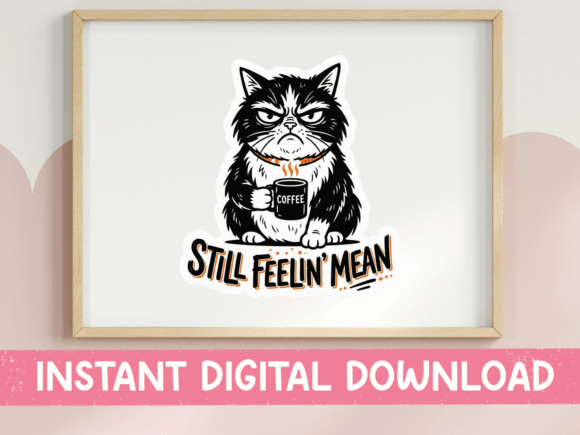
As a designer who spends more time staring at stitch simulations than I do sleeping, I have learned to be skeptical of cute graphics. Not every image translates well from a flat digital screen to the textured, dimensional world of thread. When I first pulled up the Still Feelin Mean Grumpy Cat Print, my initial reaction was one of cautious optimism. The concept is undeniably charming—a fluffy black-and-white cat, arms crossed in definitive protest, sipping coffee with an expression that says "do not perceive me." But charm does not always equal stitchability. I needed to know if this design would hold up under the needle, especially for clients who expect durability and clarity in their custom apparel.
First Impressions: Mood and Visual Personality
The immediate mood of this piece is relatable sarcasm, wrapped in a cozy aesthetic. For embroidery designers, this is a goldmine. We are constantly looking for designs that speak to the current cultural moment while remaining timeless enough to sell year-round. The hand-lettered text "Still Feelin Mean" beneath the cat is rendered in a heavy ink style. This is a crucial detail. In embroidery, thin, wispy fonts often disappear or look messy due to stitch density limitations. A heavy, bold font suggests that the digitizer has accounted for the physical properties of thread, allowing for clean satin stitches or dense fill stitches that remain legible even after multiple washes.
The visual personality is distinct. It is not just a cat; it is an attitude. This makes it ideal for personalized gifts where the recipient’s humor is part of the appeal. Whether it is for a morning person’s ironic mug rug or a night owl’s favorite hoodie, the design carries a narrative. As a reviewer, I look for this kind of inherent storytelling because it increases the perceived value of the finished product. Customers are not just buying a stitched image; they are buying a vibe.
Real-World Application: From Digital File to Finished Product
To truly evaluate the Still Feelin Mean Grumpy Cat Print, I mentally placed it into several common production scenarios. Let’s consider a custom embroidered tote bag. Tote bags are typically made from canvas or heavy cotton, which provides a stable base for embroidery. The black-and-white contrast of the cat would pop beautifully against a natural beige or olive-green fabric. The crossed arms and the coffee mug create a compact central focal point, which is perfect for the standard 5x7 or 6x10 hoop sizes commonly used for bags.
However, the real test comes with apparel. Imagine this design on a sweatshirt. Sweatshirt fleece is thick and plush. If the stitch density is too low, the fabric pile will poke through the stitches, making the cat look fuzzy in the wrong way. If the density is too high, the garment will pucker and feel stiff. A well-digitized version of this graphic should use a combination of fill stitches for the cat’s body to cover the fabric evenly, and precise satin stitches for the outline and the lettering to create definition. The "sticker-style" border mentioned in the description is particularly useful here. It acts as a frame, containing the design and preventing the edges from fraying or getting lost in the fabric texture.
For Etsy sellers and small shop owners, versatility is key. This design could easily transition into an embroidered patch. Patches are trending heavily in the craft business sector right now. By stitching this design onto twill or felt and cutting it out with a merrowed edge, you create a versatile accessory that customers can iron or sew onto jackets, backpacks, or hats. This expands the utility of a single digital embroidery file, maximizing your return on investment.
Technical Considerations and Potential Pitfalls
While the design is strong, there are areas where caution is necessary. The primary concern with any black-and-white design is contrast and registration. When stitching the white fur of the cat against a dark fabric, you must ensure that the underlay stitches are sufficient to prevent the background color from showing through. Conversely, if you are stitching this on a white shirt, the black outlines must be sharp. Any misalignment between the color blocks will be immediately visible.
Another critical factor is the size of the hoop. If you attempt to shrink this design significantly for a baby embroidery project, such as a onesie or a small bib, you risk losing the detail in the cat’s face and the legibility of the text. The phrase "Still Feelin Mean" needs enough space to breathe. If the letters become too small, the satin stitches may bunch up, creating a bulky, unreadable mess. I always advise testing the design on scrap fabric at the intended size before committing to the final garment. This is especially true for stretchy fabrics like jersey knits, where proper stabilizer usage is non-negotiable.
Speaking of stabilizers, the choice here depends on the fabric. For a structured item like a cap, a cut-away stabilizer is essential to support the weight of the stitches, particularly around the dense areas of the cat’s body and the heavy lettering. For a woven tea towel or apron, a tear-away might suffice, but only if the stitch density is moderate. Always check the stitch count and density recommendations provided with the digital embroidery file. If these details are not explicitly stated, reach out to the creator or run a test stitch-out.
Enhancing Brand Consistency and Customer Trust
For commercial embroidery projects, consistency is everything. Using a high-quality design like the Still Feelin Mean Grumpy Cat Print helps build brand trust. When a customer receives a product where the stitches are even, the colors are vibrant, and the design is centered perfectly, they are more likely to leave a positive review and return for future purchases. This design fits seamlessly into a boutique branding strategy that values humor and quality. It appeals to a demographic that appreciates handmade products with personality.
Moreover, the design’s adaptability allows for creative marketing. You can create printable mockups showing the design on various items—mugs, pillows, blankets—to showcase its versatility on your online store. These visual assets help customers imagine the product in their own lives, increasing buyer engagement. Whether it is holiday embroidery for a grumpy uncle or a everyday treat for yourself, the emotional connection drives sales.
Practical Notes for the Embroidery Designer
Before you load this design into your machine, take a moment to review the technical specs. Confirm the hoop size compatibility. Check if the file formats provided match your machine’s requirements. If you are planning to sell finished items, verify the licensing terms. Most designers allow commercial use for physical products, but restrictions may apply to digital resale. Never assume; always read the license.
Test the thread colors. While black and white seem simple, the shade of white matters. A bright white may look stark against a cream-colored sweater, while an off-white might blend too much. Experiment with different thread brands to find the sheen and thickness that best complement the fabric texture. Also, consider the background. If you are stitching on a patterned fabric, ensure the design’s solid areas are large enough to stand out against the print.
In conclusion, the Still Feelin Mean Grumpy Cat Print is a robust candidate for your next embroidery project. It balances aesthetic appeal with practical stitchability, provided you respect the technical constraints of size and fabric. For T-Shirt Designs and other Graphics, it offers a fresh, humorous take that resonates with modern consumers. By approaching it with a designer’s eye for detail and a crafter’s respect for materials, you can turn this digital asset into a standout handmade product that delights customers and elevates your craft business.