Retro Tech and Animal Collage: A Designer’s Review
As a designer who spends more time staring at stitch simulations than I do sleeping, I have developed a specific set of criteria for what makes a machine embroidery design truly viable. It is not just about how it looks on a screen; it is about how it behaves under the needle. When I first opened the files for Retro Tech and Animal Collage in Halfton, my initial reaction was one of cautious optimism. The concept—a whimsical blend of vintage technology and animal silhouettes rendered in a halftone style—promises a unique aesthetic that stands out in a market saturated with standard floral and monogram motifs.
This review is written from the perspective of someone who intends to use this asset in real-world production. Whether you are an Etsy seller looking to refresh your shop inventory, a boutique owner creating custom merchandise, or a hobbyist making personalized gifts, understanding the practical implications of this design is crucial before you commit thread to fabric.
The Visual Personality and First Impressions
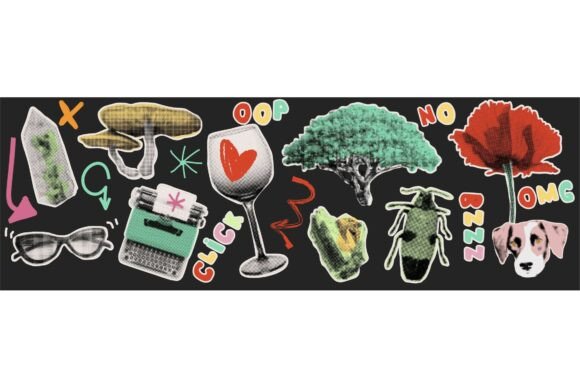
The core appeal of Retro Tech and Animal Collage in Halfton lies in its eclectic mood. It merges the nostalgia of analog tech—specifically the typewriter silhouette—with the warmth of animal imagery, tied together by "click" lettering. This combination creates a narrative feel, suggesting creativity, communication, and a touch of playful irony. For creative branding, this is gold. It does not scream for attention; rather, it invites closer inspection.
From a graphic standpoint, the halftone effect is a bold choice for embroidery. In digital Illustrations and Graphics, halftones are easy to render with gradients of dots. In embroidery, however, they present a challenge. The design relies on the spacing of stitches to create tone rather than solid fills. My first impression was that the layout is well-organized, with elements neatly separated, which suggests the creator has considered the stitching order. This separation is vital for maintaining clarity, especially when dealing with complex silhouettes like a dog or intricate mechanical parts of a typewriter.
Real-World Application: The Tote Bag Test
To evaluate the true potential of this design, I mentally walked through a common project scenario: creating a custom tote bag design for a local bookstore or a writer’s workshop. This is the ideal use case for Retro Tech and Animal Collage in Halfton. The rugged, canvas texture of a tote bag can handle the visual weight of the halftone pattern without the details getting lost.
When digitizing or reviewing such a file, I look for how the halftone dots translate into actual stitches. If the dots are too small, they may pull on the fabric or break during washing. If they are too large, the image loses its retro charm and looks pixelated. In this case, the scalable vector format mentioned in the description is a significant advantage. It allows me to resize the elements to fit various hoop sizes without losing the integrity of the lines. For a tote bag, I would likely scale the main collage to occupy the center panel, using a contrasting thread color to make the "click" lettering pop against the natural cotton background.
Beyond tote bags, this design translates beautifully to sweatshirt embroidery. The cozy, casual vibe of a crewneck sweatshirt pairs well with the nostalgic theme. Here, the halftone style works in our favor because it avoids the heavy, stiff feel of a 100% solid fill stitch. A lighter stitch density means the garment remains soft and wearable, which is a key selling point for customers who prioritize comfort.
Navigating Technical Challenges
While the aesthetic is strong, we must address the technical realities. Embroidering halftone patterns requires precision. The primary concern with Retro Tech and Animal Collage in Halfton is stitch density and registration. If you are working with stretchy fabrics, such as jersey knits for baby clothes or t-shirts, the halftone dots can distort if the stabilizer is not adequate. I strongly recommend using a cut-away stabilizer for any garment that will be washed frequently, as it provides ongoing support to the stitches.
Another critical consideration is fabric texture. On highly textured fabrics like terry cloth towels or wool blankets, the fine details of the typewriter keys or the dog’s fur silhouette might get lost. In these cases, I would advise simplifying the design or increasing the size significantly. For smooth fabrics like broadcloth or polished cotton, the design will shine. However, on dark fabrics, you must ensure high contrast. Since halftones rely on negative space, using a light thread on a dark fabric can sometimes create a "ghosting" effect if the background fabric shows through too much. Testing on scrap fabric is non-negotiable here.
Curved surfaces, such as caps or hats, present another hurdle. The rigid nature of the typewriter silhouette might not conform well to the curved front panel of a baseball cap unless the design is scaled down significantly. For embroidered patch creation, however, this design is excellent. Patches allow for dense stitching on a stable backing, preserving the crispness of the halftone dots and the sharp edges of the lettering.
Commercial Value and Brand Consistency
For small business owners and craft entrepreneurs, the uniqueness of a design directly impacts perceived value. Retro Tech and Animal Collage in Halfton offers a distinct visual identity that can help differentiate your brand. It appeals to a demographic that values vintage aesthetics, literature, and pets—a surprisingly large and loyal market segment. Using this design in your commercial embroidery projects can enhance brand consistency if your shop focuses on quirky, intellectual, or nostalgic themes.
Furthermore, the versatility of the elements allows for modular use. You might not always need the entire collage. The dog silhouette alone could serve as a charming accent for baby embroidery items, while the typewriter could be used for writer-themed gifts. This modularity increases the return on investment for the digital embroidery file. It allows you to create a cohesive collection of products, from aprons to pillow covers, without buying multiple separate designs.
Practical Designer Notes for Best Results
Before you load this design into your machine, consider these practical steps to ensure a professional finished product:
- Test Stitch Density: Run a test on similar fabric to check if the halftone dots are too dense, which can cause puckering, or too sparse, which may look unfinished.
- Check Thread Contrast: Halftones rely on visual mixing. Ensure your thread color contrasts sufficiently with the fabric to maintain the illusion of tone.
- Verify Licensing: Always confirm the license terms provided with the download. While many designs allow for commercial use of finished physical items, restrictions may apply to digital resale or mass production.
- Inspect Small Details: Zoom in on the "click" lettering. Ensure the strokes are wide enough to be stitched cleanly with a satin stitch or running stitch, depending on the digitizing.
- Use Proper Stabilizer: Match your stabilizer to your fabric. Tear-away for stable woven fabrics, cut-away for knits, and water-soluble for delicate or pile fabrics.
In conclusion, Retro Tech and Animal Collage in Halfton is a thoughtful addition to any designer’s library. It bridges the gap between modern digital aesthetics and traditional craft, offering a fresh take on vintage motifs. With careful attention to fabric choice and stabilization, it can elevate your handmade products from simple crafts to curated design assets. Whether for a holiday gift, a boutique launch, or a personal project, this design holds up under scrutiny, provided you respect the technical demands of the halftone style.