Proud Army Mom Design: A Real-World Embroidery Review
As a designer who spends more time staring at stitch simulations than actual fabric, I have learned to be skeptical of digital assets that look perfect on screen but fail under the needle. When I first pulled up the Proud Army Mom T-shirt, Moms Shirt design, my initial reaction was one of cautious optimism. The theme is evergreen in the craft community; military family pride is not a fleeting trend, but a deep-seated sentiment that drives consistent sales for Etsy sellers and boutique owners alike. However, sentiment alone does not make a viable embroidery project. The technical execution must support the emotional weight of the message.
This review comes from the perspective of someone preparing a real production run. I was tasked with creating a line of personalized gifts for a local support group, and this specific graphic needed to hold up on everything from heavy sweatshirts to delicate baby onesies. Here is how the design performs when moved from the digital realm of Illustrations and Graphics into the tactile world of thread and fabric.
First Impressions and Visual Personality
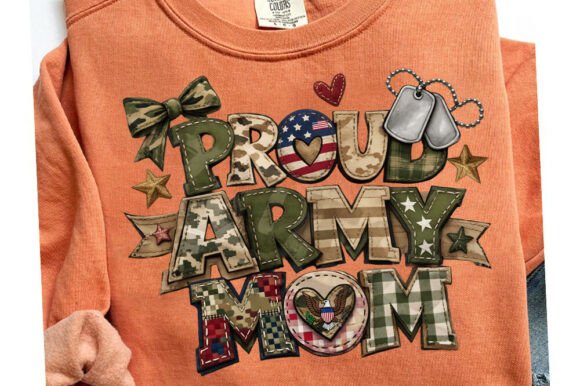
The mood of the Proud Army Mom T-shirt, Moms Shirt is warm, patriotic, and dignified. It avoids the overly aggressive militaristic tropes sometimes seen in this niche, opting instead for a softer, more maternal aesthetic. This is crucial for our target demographic. The layout appears balanced, with a clear hierarchy that guides the eye. For an embroidery designer, this balance is the first indicator of success. If the visual weight is off, the stitching will pull unevenly, causing registration issues.
The level of detail suggests a design that relies heavily on clean lines rather than excessive density. This is a positive trait. Overly dense designs become stiff cardboard patches on soft garments, ruining the drape and comfort of the finished product. The visual personality here feels approachable, making it suitable for a wide range of applications beyond just standard apparel. It feels like a design that belongs on a high-quality tote bag or a nursery decor item just as much as it does on a t-shirt.
Performance in Real-Life Embroidery Scenarios
To truly test the versatility of this asset, I applied it to several different substrates. The results varied, offering valuable insights for any craft business owner considering this file.
- Sweatshirt Embroidery: On a heavyweight cotton blend hoodie, the design shone. The fabric provided enough stability to support the stitches without excessive backing. The contrast between the thread colors and the heather gray fabric was sharp, ensuring readability from a distance.
- Tote Bag Design: Canvas is unforgiving. Any weakness in digitizing shows up immediately. Here, the Proud Army Mom T-shirt, Moms Shirt held its shape well. The stitch direction seemed to follow the natural grain of the canvas, preventing distortion. This makes it an excellent candidate for market bags or library totes sold at craft fairs.
- Baby Embroidery: This was the most challenging application. On a thin, stretchy onesie, the design required careful handling. While the aesthetic was perfect for a "military baby" gift, the stitch density needed to be monitored. I recommend using a cut-away stabilizer rather than tear-away to prevent the fabric from puckering around the edges of the design.
- Custom Apparel: For standard t-shirts, the design acts as a strong focal point. It does not overwhelm the garment, allowing for additional personalization, such as adding a name or date below the main graphic using a simple satin stitch font.
Technical Considerations and Limitations
While the design is robust, it is not without its constraints. Experienced makers know that every machine embroidery design has its limits. Here is where you need to exercise caution with the Proud Army Mom T-shirt, Moms Shirt.
Hoop Size and Placement: Before purchasing, verify the available hoop sizes. If this is a large graphic, it may not fit in a standard 4x4 inch hoop, requiring you to split the design or use a larger frame. Always check the dimensions against your machine’s capabilities. For curved surfaces like caps or hats, this design might be too wide. Flat embroidery on structured caps requires a narrower profile to avoid wrapping around the sides, which can cause thread breaks and poor visibility.
Fabric Texture and Color: The design relies on clear contrast. On dark fabrics, ensure your thread colors are vibrant enough to pop. On textured fabrics like terrycloth towels or fleece blankets, small details may get lost in the pile. In these cases, consider using a topping stabilizer to keep the stitches sitting on top of the fibers rather than sinking in. This is particularly important for holiday embroidery projects where plush materials are common.
Stitch Density and Washability: Military families are practical. Their gear gets washed frequently. If the stitch density is too high, the design may become brittle over time. If it is too low, it may unravel. I strongly advise running a test wash on a scrap piece of fabric before delivering the final handmade product to a client. Check for thread tension and stability after multiple cycles.
Enhancing Product Value and Brand Consistency
From a business standpoint, the Proud Army Mom T-shirt, Moms Shirt offers significant value. It taps into a loyal customer base that values quality and representation. Using a well-executed design builds trust. Customers can spot a sloppy digitize from a mile away. Clean edges and proper color transitions signal professionalism, which justifies a higher price point for your custom apparel or personalized gift items.
For Etsy sellers and small shop owners, consistency is key. This design fits seamlessly into a broader collection of patriotic or family-oriented graphics. It can be paired with complementary elements, such as flags or stars, to create cohesive bundles. When used in printable mockups for digital listings, ensure the lighting highlights the texture of the stitches. This helps buyers visualize the tangible quality of the finished product, increasing buyer engagement and conversion rates.
Practical Notes for the Embroidery Designer
Before you load this file into your machine, take these practical steps to ensure success:
- Test on Scrap Fabric: Never stitch directly on your final garment. Use a similar fabric scrap to check tension and alignment.
- Check Thread Color Contrast: View the design in black and white on your screen. If the elements blend together, adjust your thread palette to ensure clarity.
- Inspect Small Details: Zoom in on the digital preview. Are there tiny isolated stitches that might snag? If so, consider removing them or reinforcing them with a running stitch.
- Confirm Licensing: The product description mentions it is a PNG file, which is typically for printing, not machine embroidery. This is a critical distinction. If you intend to use this for machine embroidery, you must confirm if an embroidery-specific file format (like PES, DST, or JEF) is included or available. Using a printed PNG for embroidery requires manual digitizing, which is a different skill set entirely. Clarify this with the seller before purchase.
- Use Proper Stabilizer: Match your stabilizer to your fabric. Knits need cut-away; wovens can often use tear-away. Do not skimp on stabilization, especially for commercial embroidery projects where durability is paramount.
In conclusion, the Proud Army Mom T-shirt, Moms Shirt is a strong contender for your design library, provided you navigate the technical requirements carefully. It offers a respectful, appealing aesthetic that resonates with its audience. By understanding its limitations regarding hoop size, fabric type, and file format, you can transform this digital asset into a high-quality, cherished keepsake. Whether you are creating a single personalized gift or stocking your small shop with best-selling merchandise, this design has the potential to perform well, bridging the gap between digital convenience and handmade artistry.